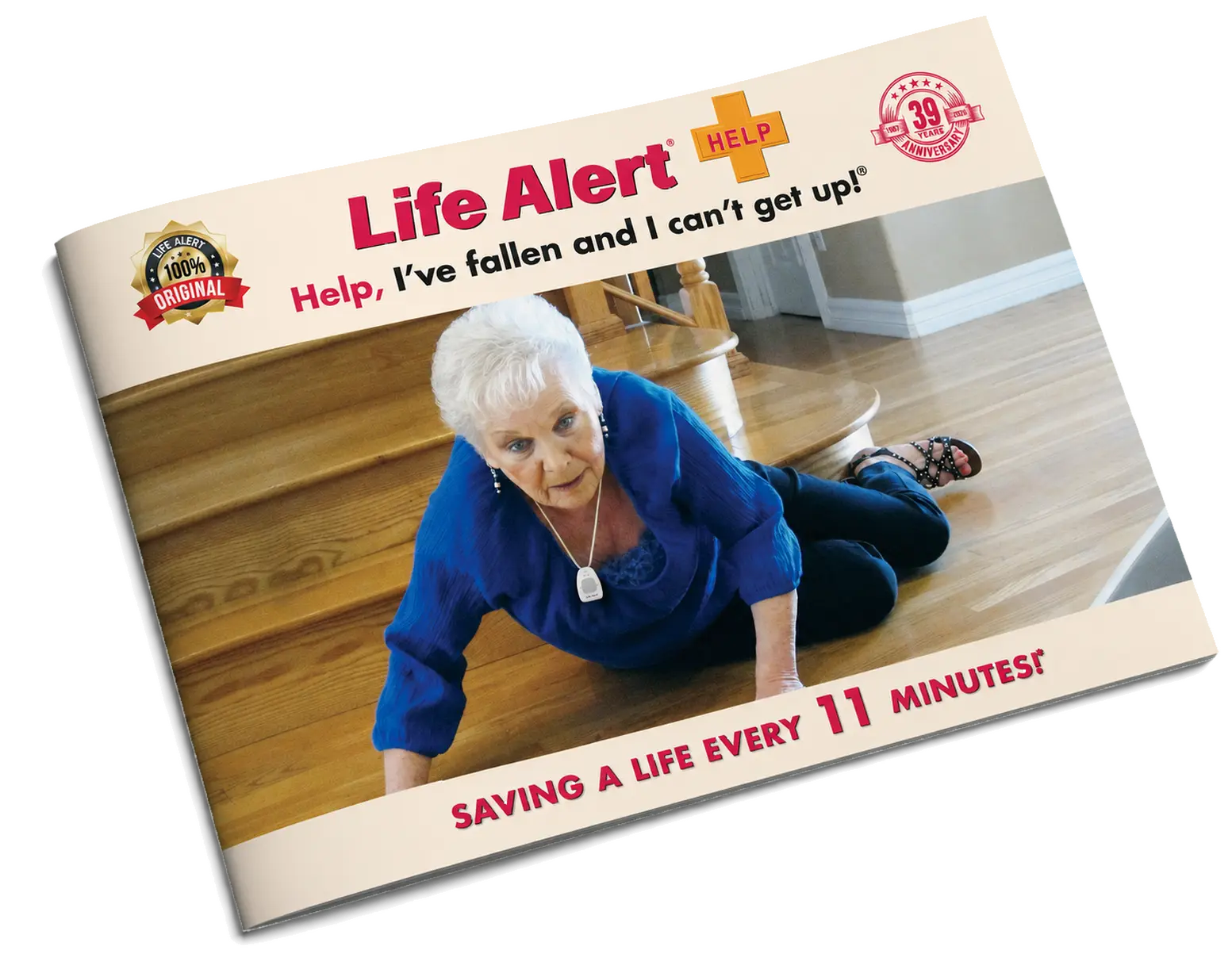
A Medical Alert System Shouldn't Need Managing
Choosing a medical alert system for an older parent is not a
simple decision. Every company promises protection. Most lead with features — GPS tracking,
mobile apps, fall detection, activity monitoring, smartwatch designs, and an expanding list of
connected technologies.
The Question Families Rarely Think to Ask
Most people are accustomed to charging devices. Phones, watches, earbuds — charging has
become an unremarkable part of daily life. When a battery runs low, the device goes on the
charger and the day continues.
Why "Up to Five Days" Is Not the Answer
Some companies now advertise battery life of "up to five days" between charges and present this
as evidence of technological advancement. Longer battery life does sound better. But it does not
solve the underlying problem — it only extends the interval before the problem occurs again.
What It Actually Looks Like
Picture an ordinary night. An older adult has gone to bed, and the pendant is on the nightstand charger —
where it has been since before dinner, because the battery indicator was low and charging it overnight
seemed like the practical thing to do.
The Longest Battery Life in the Industry
Competitors argue over whose wearable lasts longer between charges. One day. Three days. Up to five days.
Pendants / Buttons Designed for Dependability
The difference between charging and not charging reflects two fundamentally different approaches to
what a medical alert system should be.
Comparison of Life Alert pendants and buttons with other medical alert companies based on charging, battery life, and continuous protection.
Pendants / Buttons Designed for Dependability
Life Alert
Other Companies
Ready for use 24 hours a day
✓ Yes
✗ No
No charging interruptions
✓ Yes
✗ No
No need to remember charging schedules
✓ Yes
✗ No
Battery life measured in years, not days
✓ Yes
✗ No
Continuous protection without daily maintenance
✓ Yes
✗ No
Does not rely on user routine to remain operational
✓ Yes
✗ No
These are not small differences. Together they represent a fundamentally different understanding of what
protection means for an older adult living at home.
Do Life Alert pendants and buttons need to be charged?
No. Life Alert pendants and buttons do not require subscriber charging. The batteries are
engineered to last for years, and when replacement is eventually needed, Life Alert monitors
this automatically and handles it directly. The subscriber never has to manage battery life.
How long do Life Alert pendant and button batteries last?
Life Alert pendant and button batteries are designed to last for years — not days. This is
intentionally different from competitors whose wearables require charging every one to five days.
Life Alert's position is that battery management is the company's responsibility, not the member's.
What is always-on protection?
Always-on protection means the pendant or button is ready every hour of every day, without
interruption. It does not come off for charging, does not sit on a nightstand overnight, and
does not require the wearer to maintain a charging schedule. For Life Alert members, protection
is continuous rather than conditional.
Why does charging matter for a wearable medical alert?
Because emergencies do not wait for a convenient moment. Falls, cardiac events, and other emergencies
happen most commonly at night, in bathrooms, and during the transition between sleeping and waking —
the exact moments when wearables are most likely to be charging. A pendant that is not being worn
cannot help.
Isn't a longer battery life between charges good enough?
A longer interval between charges reduces inconvenience but does not eliminate the underlying
vulnerability. Whether a wearable needs charging every day or every five days, there are still
periods when it is off the body and the person is unprotected. The five-day interval also makes
it harder, not easier, to maintain a consistent habit — particularly for someone with an irregular
schedule or any degree of memory difficulty.
Protection Should Not Depend on a Perfect Routine
The best safety device is the one a person does not have to think about.
Medical Alert Systems page or call us today
at 800-360-0329