Why Nighttime Emergencies Are One of
the Biggest Fears for Caregivers
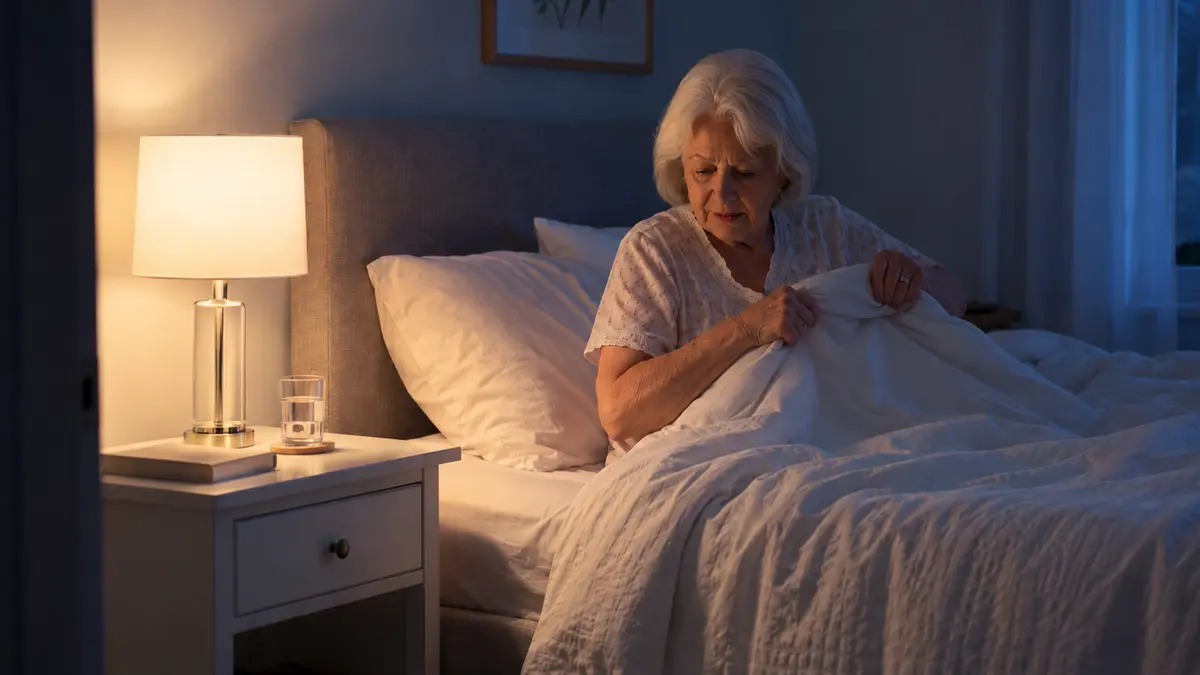
Nighttime emergencies worry caregivers so much because the usual safety nets disappear after dark.
Phones are out of reach, lights are low, and no one is likely to notice a problem until morning.
A wearable help button lets someone request help within seconds instead of waiting hours to be found.
Many adult children feel fairly calm during the daytime. Parents answer calls, neighbors are awake,
appointments happen during business hours, and routines are predictable. Nighttime is different.
A phone may be charging and out of reach. A person may wake up dizzy, disoriented, or unsteady
on the way to the bathroom. If something happens in those quiet overnight hours, getting help
quickly becomes much harder.
This part of caregiving rarely comes up in doctor’s appointments or family conversations.
It lives in the back of the mind, in the awareness that the hours between midnight and morning
are different from the rest of the day.
The Feeling Most Caregivers Recognize
Many adult children know what it is to wake in the middle of the night and reach for the phone.
Is everything all right? Did something happen while I was asleep?
Even when a parent is healthy and independent, there is always the possibility of an unexpected
emergency. And knowing that you might not find out about it until morning can be unsettling.
Caregivers Cannot Be on Call Every Night
Even the most attentive adult children cannot be available around the clock. They have jobs and
families, and they need sleep, too. A nighttime emergency can happen without warning, when a
caregiver is asleep or simply too far away to respond quickly. Even a caregiver who does get word
needs time to wake up, understand what happened, and get there.
When Phones Are Simply Not Within Reach
It would be easy to say that a phone solves the problem of nighttime emergencies, and in many
situations it does. But phones are not always with their owners, and that matters more than it
might seem.
A phone charging on a dresser across the room cannot be reached from the floor. A phone left
downstairs before bed is no help at 3 AM. Sleepwear rarely has pockets, and bathrooms are
rarely where people bring their phones. A phone dropped behind furniture during a fall, or simply
forgotten in the confusion of waking up disoriented, might as well not exist.
This does not make phones inadequate. It means that in the moments when help is most urgently
needed — on the floor in the dark, dizzy and frightened — the phone is often somewhere else.
Why Is Nighttime Confusion a Risk of Its Own?
Falls get most of the attention at night, but confusion may be the more overlooked danger.
An older adult who wakes up disoriented may not understand right away what is happening. Some
medications cause drowsiness or dizziness that is stronger in the early morning hours. Low blood
sugar can produce confusion that feels, to the person experiencing it, like ordinary tiredness.
The early signs of a stroke — such as sudden weakness, difficulty speaking, or numbness on
one side — can be mistaken in the middle of the night for simply not being fully awake.
Those signs are always an emergency, and anyone who notices them should call 911 right away.
Reaction time is slower after being woken suddenly, balance is less reliable when moving from
lying down to standing, and most homes are poorly lit at night. Together, these turn a manageable
situation during the day into a serious one at 3 AM.
Confusion also raises a fair question about any emergency device: what if the person is too
disoriented to use it? A help button asks very little. For someone who is aware enough to
recognize that help is needed, using one means pressing a single button, with no screen to unlock
and no number to dial. That simplicity is especially valuable when thinking is slow or a person
is frightened. It does not solve every situation, but it makes requesting help much easier.
Why Do Bathrooms Become a Major Concern at Night?
Almost every family that thinks carefully about nighttime safety ends up in the same place:
the bathroom.
The reasons are practical. Nighttime trips to the bathroom are common, especially for older
adults. The floor is often hard, the lighting is dim, and standing up after lying down can bring
on dizziness without warning. Phones rarely come along.
Falls are common in this age group. A person who loses balance in a bathroom at night may end
up on the floor, unable to get up, in a room with no phone and a closed door, in an otherwise
quiet house.
Many caregivers keep returning to this scenario because it is so ordinary. It needs no unusual
medical event, and it can happen to someone who seemed perfectly fine the night before.
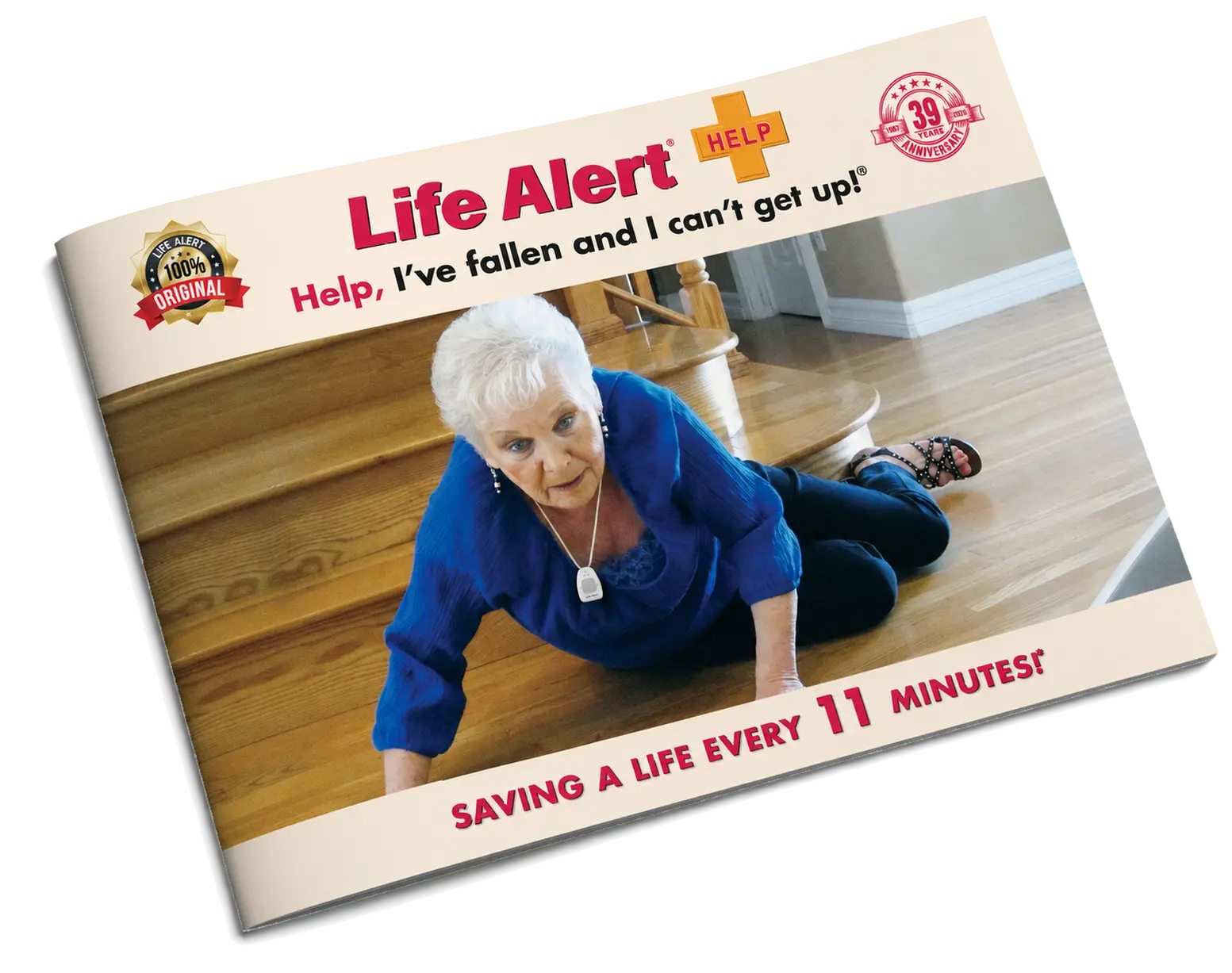
“I fell on the floor and couldn’t get up… I live alone, it was at night.
Pushed my Life Alert button, EMS came in no time and was so sweet. They wanted to know if I
wanted them to call someone.”
L.H., Camden, TN
The Fear That Does Not Get Named
When caregivers talk about nighttime emergencies, the conversation usually centers on falling.
The deeper fear is time.
The worry is the hours that might pass before anyone knows. A parent who falls at 2 AM
may lie on the floor until morning, when an unanswered phone call finally sends someone driving
over. A person who wakes up confused may spend hours frightened and alone before the sun comes
up and someone checks in.
Researchers who study falls use the term “long lie” for an extended period spent on
the floor after a fall, when a person cannot get up. A peer-reviewed study published in
The BMJ found that prolonged time on the floor after a fall was associated with serious
injuries, hospitalization, and subsequent moves into long-term care.
That gap — between something happening and someone finding out — is what keeps many
caregivers awake, and daytime planning rarely closes it.
The Part Nobody Talks About: Independence
Parents do not want to be watched, and adult children know it. A conversation about safety can
feel like a negotiation over independence, and nobody wants to lose that negotiation.
Most older adults would rather manage on their own than be checked on or supervised in ways that
suggest someone no longer trusts them to take care of themselves.
The aim is not surveillance. It is a home where an older adult can sleep, get up at 3 AM,
and go about their life without anyone hovering.
What Families Look For
Many families look for ways to make nighttime emergencies less isolating, for the caregiver’s
peace of mind and for the older adult who wants to stay at home without feeling like a burden.
A wearable emergency response system like Life Alert lets an older adult call for help from
wherever they are — whether on the bathroom floor, in a hallway, or in bed — without
needing a phone. The connection to help happens within seconds.
What sets the Life Alert button apart is that it never needs charging. A device that has to be
recharged tends to spend the night on a charger, across the room from the person who may need it.
Because the lightweight Life Alert button needs no charging, it can stay on through the night,
worn as a necklace or on a wristband, whichever is more comfortable to sleep in.
For the bathroom, Life Alert also offers a waterproof Shower HELP Button with built-in two-way
voice communication as an extra layer of protection. It can be installed where it is most useful,
such as next to the toilet or within reach of the shower or tub. Because the speaker and
microphone are built into the button, the person can speak right into it rather than having to
raise their voice toward a base unit in another room.
What Nighttime Safety Actually Looks Like
Nighttime safety does not have to mean cameras or daily check-in calls that feel more like
reporting than conversation. It means an older adult can go to bed knowing that if something
happens, they have a way to call for help without waiting until morning. And their adult children
can sleep without feeling they must check their phones throughout the night.
No safeguard removes the risk of a fall at night. But when someone can press a help button,
they no longer have to wait hours for someone to discover what happened.
To learn more about how Life Alert supports safe, independent living at home and on the go,
visit our Medical Alert Systems page or call us today
at for a free brochure.
Sources
-
Wild D, Nayak USL, Isaacs B. “Inability to get up after falling, subsequent time
on floor, and summoning help: prospective cohort study in people over 90.”
BMJ. 1981;337:a2227.
bmj.com/content/337/bmj.a2227
-
Life Alert official website.
Information regarding the Life Alert button, no-charge batteries, waterproof Shower HELP
Button, and 24/7 emergency response.