An Ounce of Prevention Is Worth a Pound of Cure
You're home doing chores or watching TV when the phone rings. You answer it – it's Mother Nature calling to let you know there's a big storm coming that is going to take out the roads and power lines. She warns you to go outside and chop some wood for the fireplace, about a week's worth. Then she asks if you need some time to prepare. If so, she'll hold off the storm for a few days.
Although that sounds quite considerate of Mother Nature to give you the heads up, it's not very realistic in the real world, where emergencies don't make appointments.
Power outages, earthquakes, severe storms, or medical emergencies can strike at any time without a phone call warning you. It can be difficult for anyone, but especially the elderly.
Do you have an emergency plan in place for your elderly loved ones who don’t live with you? What will you do if you’re not able to get to them?
Here are some tips to help prepare for senior safety and emergency preparedness.
What Should Seniors Keep in an Emergency Kit?
One of the easiest things to do is to actually prepare an emergency kit. The kit should have your basic bandages, alcohol swabs, aspirin, ointment, a cold pack, and an emergency blanket.
Also, it’s a good idea to put in the kit a supply of prescription medications, at least two weeks' worth, in the event that the roads are taken out and you can’t get to a local drugstore or prescriptions can’t be delivered.
Extra eyeglasses, hearing aid batteries, and other essential supplies should be part of the kit as well.
Emergency Food Supplies
In the 1970s, General Foods capitalized on its orange powdered drink, Tang, as being “The Drink of Astronauts” because NASA used the powdered substance for astronauts in space. Astronaut food and drinks were not as readily available as it is today; only now it’s been relabeled as Emergency Food Supply. Today, you can buy emergency water in pouches that can have up to a five-year shelf life.
Also, there are now vast amounts of food that can be consumed without the need for a stove or refrigerator. There are foil-sealed tuna and chicken that are ready to eat, nut butters, and canned goods that have a long shelf life.
There are even freeze-dried fruits, vegetables, and ice cream that you can buy online, and you don’t even need to go through astronaut training camp to eat them.
Make sure the elders in your life have this kind of food on hand in the event that the food in the home has gone bad. Also, you may want to tape a pair of scissors to the box or bag of food supplies so they can open the bags easily.
Additionally, you'll want to make sure there's non-perishable food and a manual can opener on hand so your senior will always have food available in an emergency. For additional recommendations on emergency food supplies, visit https://www.ready.gov/food.
If the senior has a pet, ensure it also has plenty of food and water to ride out the storm.
Preparing for Power Outages
There are so many options for bright lighting. There are portable solar and/or USB-rechargeable LED lanterns that are lightweight and easy to carry from room to room. Get a set of four, and the room will be illuminated nicely so your elder can read to occupy time.
Of course, you'll also want to have flashlights on hand with extra batteries. Buy a few that have magnetic backing so they can be kept on the refrigerator for easy access.
There are many rechargeable cabinet lights that can turn on automatically once a cabinet door is opened. These are the types of lights that usually have a month-long life expectancy, and they are charged with a USB port that can be plugged into a wall. These are great to have for any dark space that a senior may enter, regardless of whether there’s an emergency.
In addition, ensure your senior has a battery-powered or hand-crank emergency radio to keep informed of the news.
Now consider, for seniors living alone, keeping emergency supplies somewhere easy to reach. Avoid heavy emergency bags that may be difficult to lift or carry. A good rule of thumb is to never pack a box or a bag that you can't lift. If packing for an elder, make it 3-5 pounds lighter.
Consider mobility limitations when choosing where to store supplies. If you are putting together an emergency supply kit for a senior citizen, don't put it high up in a cabinet. That would require the elderly to get a step stool and climb up there, which could be even more dangerous.
What Emergency Information Should Seniors Have Ready?
Along with a flashlight, you’ll also want to keep the following on the refrigerator as well: a list of medications, doses, and times per day; a list of allergies; an emergency contact list; and any pet requirements.
Copies of important medical information should be readily available.
As for lights, there are many under-counter lights that can turn on automatically once a cabinet door is opened. These are the types of lights that usually have a week-long or longer life expectancy, and they are charged with a USB port that can be plugged into a wall. Also, make sure you have plenty of batteries on hand.
Medical Alert – When Seniors Need Emergency Help
Not all emergencies involve Mother Nature. Sometimes, danger can lurk around the home on a bright, sunny day. A simple stumble could lead to a catastrophic outcome for an elderly person.
During a storm, families may check in more frequently, but emergencies can happen on ordinary days, too, when everyone is busy with their daily responsibilities.
So, how can you help your senior loved one continue living independently? How can they stay protected 24/7/365 during all four seasons?
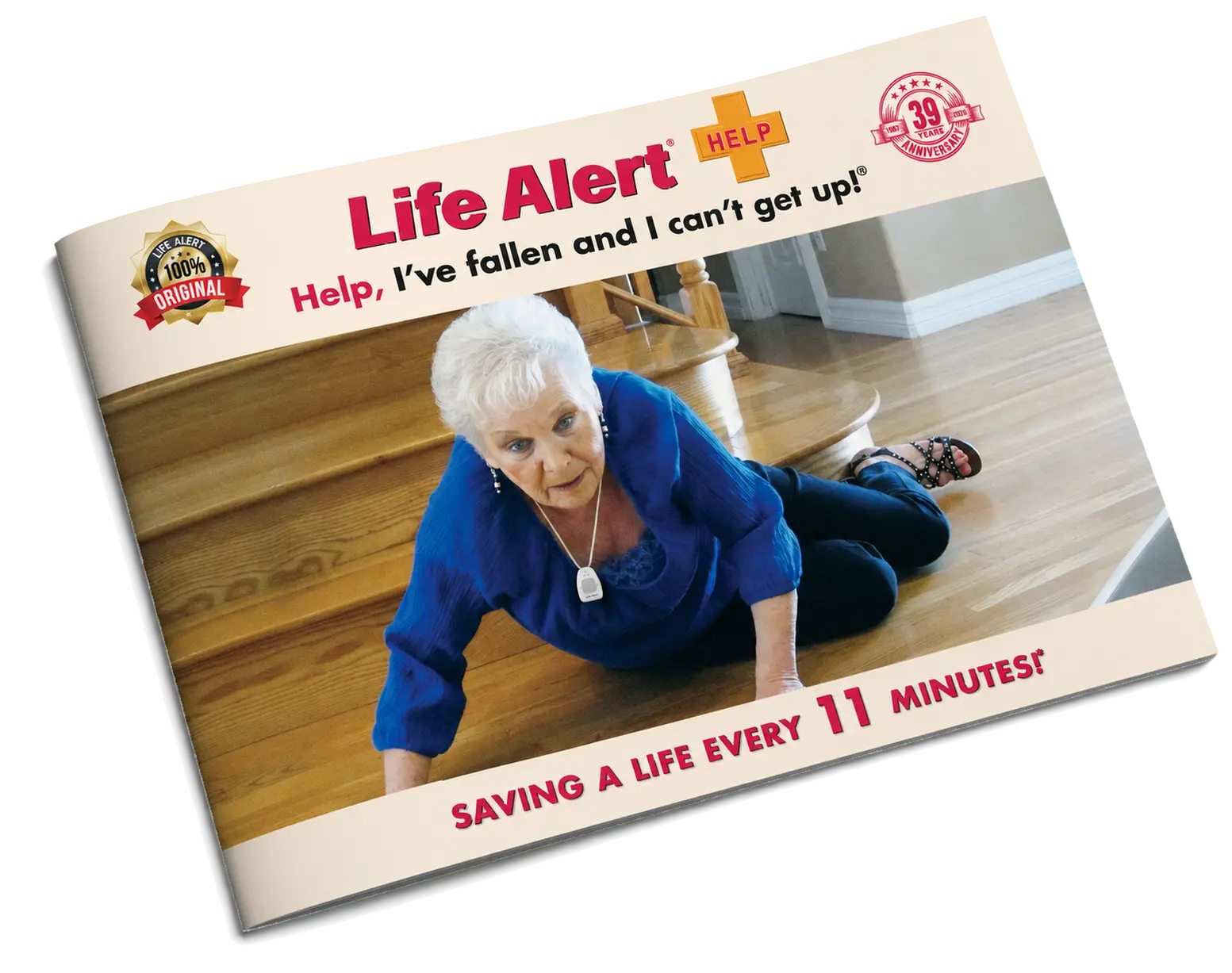
Life Alert Emergency Response can help. Its protection packages include wearable, waterproof devices so that when an emergency occurs, the senior simply presses a button to connect with a trained human dispatcher who can arrange help.
Life Alert devices never need charging, so your loved one stays protected all the time. To learn more about Life Alert's emergency protection, visit our Medical Alert Systems page.
Frequently Asked Questions
What should be in an emergency kit for seniors?
An emergency kit for seniors should include bandages, alcohol swabs, aspirin, ointment, a cold pack, an emergency blanket, at least a two-week supply of prescription medications, extra eyeglasses, and hearing aid batteries.
What food should seniors stock for emergencies?
Seniors should stock non-perishable foods like canned goods, foil-sealed tuna and chicken, nut butters, and freeze-dried fruits and vegetables. Emergency water pouches with up to a five-year shelf life are also recommended. A manual can opener is essential.
How should seniors prepare for power outages?
Seniors should have portable solar or USB-rechargeable LED lanterns, flashlights with extra batteries, rechargeable cabinet lights, and a battery-powered or hand-crank emergency radio to stay informed during power outages.
Where should seniors store emergency supplies?
Emergency supplies should be stored at an easy-to-reach height — never high up in cabinets. Bags and boxes should be light enough to lift, ideally 3-5 pounds lighter than what a non-senior would carry.
What emergency information should seniors keep handy?
Seniors should keep a list of medications, doses, and times per day; a list of allergies; an emergency contact list; and any pet requirements on the refrigerator for quick access. Copies of important medical information should also be readily available.
How can Life Alert help seniors during emergencies?
Life Alert provides wearable, waterproof devices that allow seniors to press a button and instantly connect with a trained human dispatcher who can arrange help. The devices never need charging, ensuring 24/7 protection.