Healthcare Does Not Stop at the Doctor's Office
For many families, senior healthcare is measured in appointments: the primary care visit,
the specialist follow-up, the prescription refill, the blood test, the physical therapy session.
Those appointments are important. But for an older adult living at home, much of healthcare
happens in the quiet hours between them.
It happens in the hallway at night, when someone gets up to use the bathroom.
It happens in the kitchen, when a meal is skipped because cooking feels like too much effort.
It happens when a pillbox is still full on Thursday, when a bruise is explained away as
nothing, or when a parent who used to move confidently now reaches for furniture while
walking across the room.
These are not always medical emergencies. At first they may look like nothing at all.
But small changes are often how families first learn that an older loved one is becoming
less safe at home.
For caregivers, the real question is not only "Is Mom seeing her doctor?" or "Did Dad
take his medication?" It is also: what is happening when no one is there?
What Families Notice That Doctors Don't
Doctors and nurses may see an older adult for a short visit every few months. Families see the patterns
that unfold in daily life.
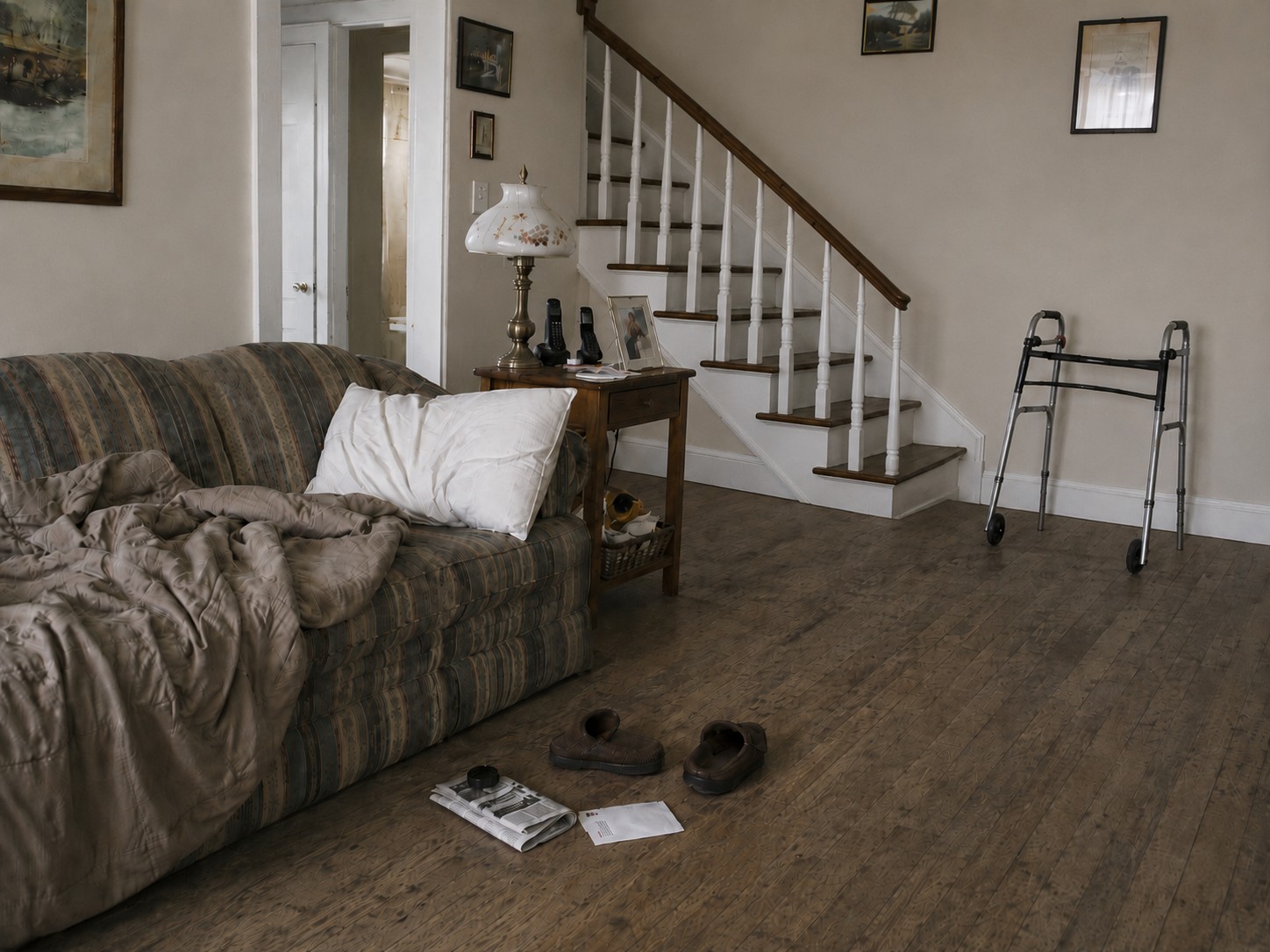
A daughter notices that her mother has stopped using the upstairs bedroom and now sleeps
on the couch. A son finds unopened mail stacked on the counter, including a notice
from the pharmacy. A neighbor mentions that the porch light has been left on for three days.
A caregiver sees that the same leftovers are still in the refrigerator.
Maybe walking has become harder. Maybe memory is slipping. Maybe pain is being hidden.
Maybe medications are confusing. Maybe the home, once perfectly manageable, is becoming
a place where an accident is more likely.
Senior healthcare is not just about treating diagnosed conditions. It is also about
noticing when daily life is becoming harder to manage safely.
Why "I'm Fine" May Not Be the Whole Story
Many older adults do not want to worry their families. Some fear losing independence.
Others are embarrassed by falls, weakness, forgetfulness, or needing help with
tasks they used to handle easily.
So they say: I'm fine.
A fall becomes "I just slipped."
A dizzy spell becomes "I stood up too fast."
A missed medication becomes "I forgot once."
A bruise becomes "It's nothing."
Sometimes those explanations are true. Sometimes they are a way of protecting independence.
Caregivers do not need to argue with every reassurance. But they should listen carefully
and look at the home itself — because the home often reveals what a loved one does not say directly.
Are there new dents in the wall from someone steadying themselves? Is the bathroom
rug bunched up? Are there expired foods, missed refills, or unopened medication bottles?
Are lights burned out in areas where the senior walks at night? Is the phone usually nearby,
or is it across the room?
When Home Safety Becomes Healthcare
The Centers for Disease Control and Prevention notes that falls are a leading threat to the
health and independence of older adults — and that fall risks can be reduced. For families,
the home is part of the care plan whether they think of it that way or not.
A loose rug is not just a housekeeping issue if an older adult has balance problems.
Poor lighting is not just an inconvenience if someone gets up several times a night.
A cluttered walkway is not just messy if a walker or cane is now being used.
The same is true of medical instructions. A doctor may recommend taking medication at a
certain time, drinking more water, using a cane, or checking blood pressure. But the success
of those recommendations depends on what happens at home.
Can the senior read the medication labels? Is the cane actually being used, or left by the door?
Is there a clear path from the bedroom to the bathroom? Is water within reach during the day?
Could they get help if something went wrong?
This is where caregivers often do the practical work: turning medical advice into routines
that can actually happen in that home.
A care plan that works only on a perfect day is not enough. The home also has to
work on a bad day — when the senior is tired, dizzy, confused, in pain, or alone.
Planning for the Hours No One Is There
Families often build care around predictable needs: meals, refills, appointments, transportation,
check-ins. Emergencies are harder to think about because no one knows when they will happen.
A senior may fall while getting out of bed. A sudden dizzy spell may happen in the bathroom.
A medication reaction may cause weakness or confusion. Someone may feel chest pain, shortness
of breath, or severe fatigue and not be able to clearly explain what is happening.
At that point, everything depends on whether the person can get help.
Picture what that moment actually looks like from the inside. It is early morning.
A senior has gotten up to use the bathroom and lost their balance in the hallway.
They are on the floor. The phone is in the bedroom. They call out, but the house is
quiet and no one else is there. They are not sure yet how badly they are hurt. They try
to move toward the bedroom and cannot get there. So they wait — in the dark, alone, not
knowing when someone will come.
Families cannot prevent every emergency. They can, however, plan for the minutes after one begins.
The Backup Plan Families Hope They Never Need
A medical alert system does not replace medical care,
caregiving, or fall-prevention changes at home. Its role is more specific: helping an older adult
reach help quickly when something goes wrong and getting to a phone is not possible.
Not all medical alert systems work the same way. In an actual emergency — when a senior is
frightened, in pain, or confused — what happens after the button is pressed matters just
as much as the button itself.
Life Alert dispatchers are not outsourced. They are Life Alert's own trained specialists,
based in the United States, and they stay on the line until help physically arrives. For
someone alone on the floor at 2 AM, that is not a small thing.
A senior who has just fallen, or who is experiencing chest pain alone at home, is not in a
position to manage the situation calmly by themselves. Having a trained voice on the line —
someone who gives instructions, coordinates with emergency responders, and does not hang up
until the EMTs are through the door — changes what that experience feels like.
One Life Alert subscriber described it this way after a cardiac emergency: "Felt
I may have had a heart attack, sweating, rapid pulse, nausea and vomiting.
I live alone and Life Alert was my help. They stayed on the line until the
ambulance and EMTs arrived. Life Alert makes me feel safe living alone."
Another described a fall: "Life Alert dispatcher was calm and gave me great instructions on
what to do and stayed with me until the EMTs arrived and administered care. They got responders here quickly."
Life Alert pendants are also fully waterproof — not just water resistant, but waterproof —
so they can be worn in the shower, where falls are common. The pendant never needs to come off.
Day or night, shower or sleep, it is always ready.
For many seniors, that combination — a button that is always there and a person who stays on the
line — is the difference between living alone and feeling alone.
Questions Worth Asking Before There Is a Crisis
The best time to ask hard questions is before an emergency.
Can your loved one safely get from the bed to the bathroom at night? Can they reach
a phone from the floor? Do they spend long hours alone? Have they fallen, even once?
Are they taking medications correctly? Are they eating regularly? Do they seem more confused,
tired, or unsteady than before?
It may also help to walk through the home with fresh eyes. Are pathways clear?
Is lighting strong enough at night? Are grab bars needed in the bathroom? Are rugs secure?
Is there someone nearby who can check in quickly if needed?
Why is home safety part of senior healthcare?
Many health risks for older adults show up at home first — falls, missed medications, poor nutrition,
dizziness, confusion, or trouble moving around safely. A safer home supports the care plan a doctor
recommends and reduces the risk of an emergency going unnoticed.
What should caregivers watch for between doctor visits?
Watch for patterns: a parent holding furniture while walking, missing meals or medications,
seeming more confused, leaving mail unopened, avoiding stairs, or becoming more isolated.
A single change may not mean much, but several together are worth discussing with a healthcare
provider.
How do I know if my elderly parent is safe at home alone?
Watch for the details that appear between appointments. Is your parent holding furniture
while walking? Avoiding stairs they used to manage easily? Skipping meals, leaving medications
untouched, or brushing off falls as nothing? These patterns, taken together, often signal
that independent living needs more support — and that an emergency response plan should be
part of that conversation.
When should a family consider a medical alert system?
When a senior lives alone, spends long periods without someone nearby, has fallen before,
has balance problems, or has health conditions that could lead to sudden weakness, dizziness,
or confusion. It is usually better to have that conversation before the first serious emergency,
not after it.
Does a medical alert system replace caregiving or medical care?
No. It addresses one specific gap: giving the senior a way to reach help quickly during an
emergency, without needing to find a phone or dial a number. Doctors, medications, family
support, and home safety all remain part of the plan.
The Goal Is Not Less Independence. It Is Safer Independence.
Most families do not want to take independence away from an older loved one. They want that
independence to last as long as possible.
That requires looking beyond appointments and prescriptions. It means noticing how the
person actually lives at home — how they walk, eat, sleep, remember, move through rooms,
manage medications, and respond when something feels wrong.
Healthcare does not stop at the doctor's office. For seniors, it continues at the kitchen
table, in the hallway, beside the bed, and in every ordinary place where a small problem
can become an emergency.
A stronger safety plan does not come from fear. It comes from paying attention, making
practical changes, and making sure that when something goes wrong at 2 AM — and no one
else is there — help is one button away.
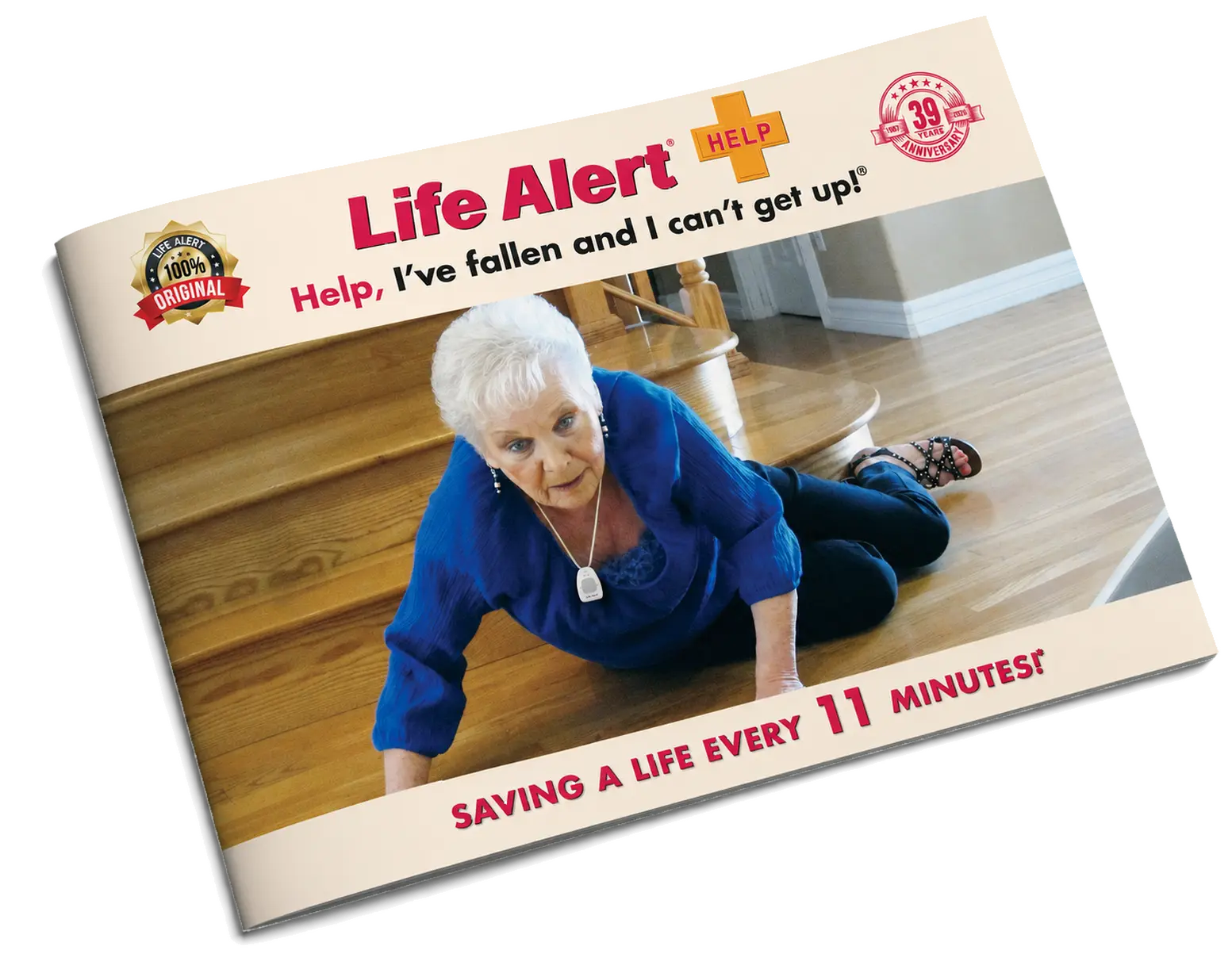
To learn more about how Life Alert supports safe, independent living at home and on the go,
visit our Medical Alert Systems page or call us today
at 800-360-0329 for a free brochure.
Source: Centers for Disease Control and Prevention, Older Adult Fall Prevention —
https://www.cdc.gov/falls
This article is for informational purposes only and is not a substitute for medical advice.
Families and caregivers should speak with a doctor or qualified healthcare professional about
medical conditions, medications, fall risk, and care planning.