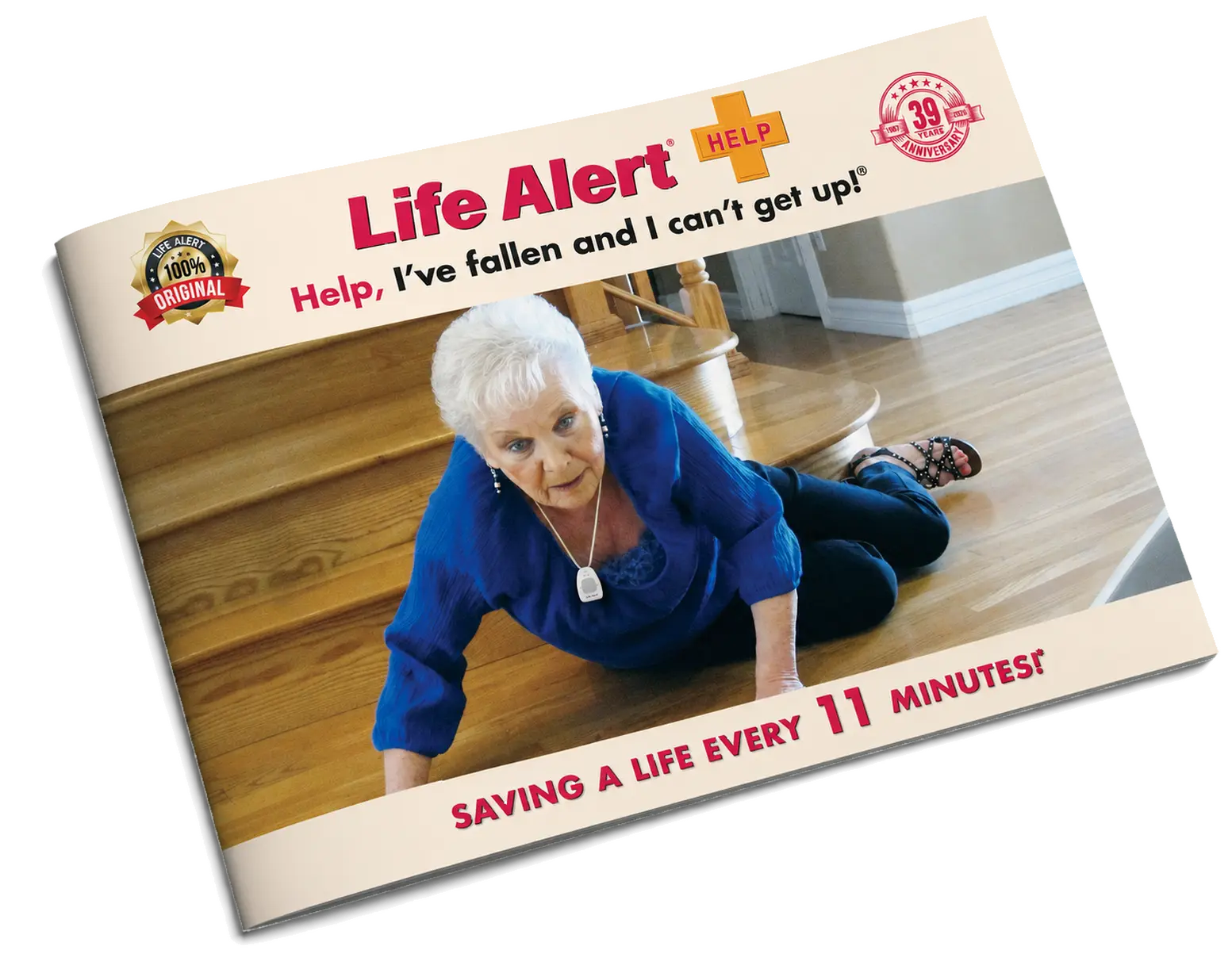
Since 1987, Life Alert has been helping seniors remain independent at home while staying connected to help during emergencies and unexpected situations. Over the years, as home health devices have become a common part of daily life for many older adults, we have seen how quickly an ordinary day can change. We have assisted many subscribers in situations that began not with a dramatic event, but with a reading on a blood pressure monitor, a glucose meter, or an oxygen device that caused sudden alarm.
In each case, the home health device did exactly what it was designed to do — it provided information. But the subscriber still needed a way to reach help.
That distinction — between monitoring a problem and getting help for one — is what this page is about.

Home Health Devices: Useful Tools With an Important Limitation
Today, many older adults use home health devices as part of their daily routines. Blood pressure monitors, glucose meters, pulse oximeters, oxygen equipment, thermometers, medication organizers, and mobility aids can all play a meaningful role in helping people manage chronic conditions and follow a physician's guidance. The FDA regulates many of these devices to ensure they meet established standards for accuracy and safety.
These tools provide something genuinely valuable: information. A blood pressure monitor may show a reading that is too high or too low. A glucose meter may alert someone to a blood sugar level that needs attention. A pulse oximeter may show oxygen levels that warrant concern.
But information is not the same as assistance.
Knowing that something may be wrong is only the first part of the challenge. The second — and more urgent — part is reaching help when the body is not cooperating, when the phone is in another room, or when fear and confusion make it difficult to think clearly about what to do next.
That is where Life Alert serves a different and essential purpose.
Can a Blood Pressure Monitor or Glucose Meter Call for Help?
No — and that limitation matters more than most people anticipate until they are in the moment.
A blood pressure monitor or glucose meter can provide a reading, but it cannot respond to what that reading means for the person holding it. It cannot speak to them, assess how they are feeling, contact emergency services, or stay with them while help is on the way.
Life Alert has assisted subscribers in situations that began with a concerning home health reading — an alarming blood pressure number, a blood sugar level that triggered dizziness or confusion, an oxygen reading that caused sudden fear. In those moments, the device had done its job. But the subscriber was alone, and getting to a phone was not possible or safe.
With Life Alert, a subscriber can press a wearable help button from wherever they are in the home and connect with a trained monitoring specialist — without needing to stand up, cross a room, or locate a telephone. The specialist can speak with them, help assess the situation, and contact appropriate assistance when needed.
Consider a situation that is more common than many families expect. An older adult checks their glucose meter mid-morning and sees a reading that concerns them. They feel shaky and lightheaded. The phone is in the kitchen. They are not sure they can get there safely. Without a wearable help button, their options are limited. With one, a single press brings a trained voice to them — and help is on the way.
Are Home Health Devices the Same as a Medical Alert System?
No — and understanding the difference is important for anyone planning for safe independent living.
Home health devices are designed to monitor, measure, remind, or notify. They help people track health data, manage medications, or observe changes in daily patterns. They are tools for information and routine management.
A medical alert system serves a different purpose entirely. It is designed to connect a person to human assistance during an emergency or uncertain situation — not to measure, but to respond.
For seniors living alone, both have value. But they are not interchangeable. A home health device may show that something is wrong. It cannot do anything about it. Life Alert adds the human response layer that home health devices, by design, do not provide.
When a subscriber presses the Life Alert button, they reach a trained monitoring specialist at a U.S.-based center staffed 24 hours a day, every day of the year — someone who can speak with them, evaluate what is happening, and coordinate the appropriate help.
Do Smart Watches Replace Life Alert?
No — and some families who have relied on smart watches in an emergency have discovered their limitations at the worst possible moment.
Smart watches can track steps, monitor heart rate, measure sleep, and offer notification features. Some include emergency SOS functions. These are genuine capabilities, and for the right user in the right circumstances, they can be useful.
But for many older adults, smart watches present practical challenges that matter significantly in a crisis. They require regular charging — a device with a low or dead battery is not available when it is needed most. Their screens are small and their interfaces complex, requiring navigation through menus, apps, and settings that can be difficult to manage under normal circumstances and nearly impossible when someone is frightened, weak, or disoriented. Emergency features on a smart watch are not the device's core purpose — they are additions to a general wellness and lifestyle product.
Life Alert has spoken with families who purchased a smart watch for a parent specifically for its emergency features, only to find that when a real situation occurred, the device was not charged, the feature was not set up correctly, or the parent could not navigate to it under stress.
Life Alert was designed from the ground up for one purpose: emergency response. Not wellness tracking, not step counting, not notifications. A single button, always worn, never requiring charging, connected to a live trained specialist every hour of every day. That simplicity is not a limitation — it is the point.
What if a Senior Sees a Concerning Reading but Cannot Reach the Phone?
This is one of the most common and most serious gaps in home safety planning for older adults living alone — and one of the clearest reasons families choose Life Alert.
A senior may check a blood pressure cuff and feel alarmed by what they see. Someone managing diabetes may feel shaky, weak, or suddenly confused after a glucose reading. A person using oxygen equipment may notice their breathing feels more labored than usual. In each case, the home health device has done its job. But the person is alone, and getting to a phone may not be safe or possible.
Life Alert helps bridge that gap directly. By pressing the help button — from anywhere in the home — subscribers reach a trained monitoring specialist who can speak with them, help them understand what is happening, and contact the appropriate assistance. The specialist stays on the line until help arrives.
For adult children and caregivers, this is often the scenario that keeps them awake at night — not a dramatic emergency, but an ordinary moment at home that goes wrong when no one is nearby. Life Alert addresses that specific concern.
How Life Alert and Home Health Devices Work Together
Families often help older loved ones build a home health routine — purchasing a blood pressure monitor, organizing medications, setting up appointment reminders, or arranging regular check-ins. These are meaningful steps that reflect genuine care.
But families also know they cannot be present every hour of the day. And home health devices, however useful, do not close that gap.
Life Alert is not a replacement for home health devices, medical care, or physician guidance. It works alongside them. The monitor provides the reading. The glucose meter shows the level. The medication organizer supports the routine. Life Alert makes sure that when any of those readings causes concern — or when something unexpected happens that has nothing to do with a device at all — the person is not alone and help is within reach.
That is why many families view Life Alert not as an alternative to the health tools already in place, but as the layer that makes all of them safer.
Does Life Alert Replace Medical Care or Home Health Equipment?
No — and it is not designed to.
Life Alert supports independent living by giving subscribers a reliable, always-ready way to reach trained monitoring specialists when a situation becomes frightening, confusing, or physically difficult to manage alone. It does not diagnose, treat, or monitor health conditions.
Following medical advice, using prescribed equipment correctly, and attending regular checkups remain as important as ever. Life Alert adds one essential capability those things cannot provide on their own: a direct connection to human help, available from anywhere in the home, at any hour, without needing to reach a phone.
Since 1987, that has been Life Alert's purpose — and for hundreds of thousands of subscribers and their families, it has made the difference between facing an unexpected moment alone and knowing that someone is always there.
To learn more about how Life Alert supports safe, independent living, visit our How It Works page or call today to request more information 800-360-0329.
Sources and Further Reading
Published May 7, 2026. Updated May 19, 2026.
Reviewed by Life Alert Editorial Team.